Double Aunofa: A Font Pairing That Brings Warmth to Your Brand
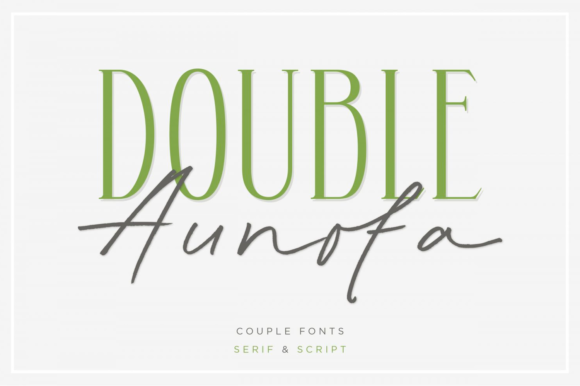
There's a particular challenge every designer and business owner faces: finding typography that feels both professional and approachable. Too often, fonts lean heavily in one direction—either sterile and corporate or playful and casual. Double Aunofa occupies that rare middle ground, offering a stunning duo of script and serif styles that work together to create branded designs with genuine personality.
What makes this typeface stand out isn't just its visual appeal. It's the way the two included styles complement each other without competing. The script carries a handwritten warmth, while the serif brings structure and readability. Used together, they create a visual conversation that feels intentional and cohesive. Used separately, each style holds its own beautifully across different applications.
Understanding the Two Faces of Double Aunofa
The script style has the natural flow of hand-lettering—think of the elegant strokes you'd see on a boutique wedding invitation or a specialty coffee label. It's expressive without being illegible, which is a balance many script fonts fail to achieve. The letterforms connect smoothly, with enough variation to feel genuinely crafted rather than mechanically generated.
The serif counterpart offers a more grounded presence. Its clean lines and subtle character details make it versatile enough for body text while still carrying enough personality to shine in headlines. This isn't a stiff, traditional serif—it has modern sensibility baked into its proportions and spacing.
Together, these two styles create a font pairing that solves a problem many creatives struggle with: achieving visual consistency across mixed-content designs. When you're building a social media post that needs both a bold headline and supporting text, or a product package that combines a brand name with descriptive copy, having two complementary styles from the same family eliminates the guesswork of matching separate typefaces.
Where This Creative Font Truly Excels
Consider a small bakery building its brand identity. The script style might carry the shop name across signage, business cards, and packaging, while the serif handles menu descriptions, ingredient lists, and website body copy. The result feels unified—like every piece of visual communication belongs to the same story.
Or think about a content creator designing Instagram graphics. The script can add personality to quote cards and announcement posts, while the serif keeps informational carousels readable and clean. That kind of flexibility is invaluable when you're producing content regularly and need your visual identity to feel consistent without becoming monotonous.
Practical applications where Double Aunofa shines include:
- Logo design — combining the script for the brand name with the serif for a tagline creates instant visual hierarchy
- Packaging design — product labels, boxes, and wrapping that need to communicate both premium quality and warmth
- Editorial layouts — magazines, lookbooks, and digital publications where pull quotes and body text need distinct but related voices
- Invitations and stationery — wedding suites, event materials, and personalized correspondence
- Marketing assets — email headers, promotional banners, and advertisement layouts
- Merchandise — t-shirts, tote bags, mugs, and other branded products
- Website design — hero sections, call-to-action areas, and blog post formatting
- Digital products — ebook covers, worksheet templates, and course materials
Making Typography Work for Your Brand
Choosing a font isn't just about what looks attractive in a preview. It's about how that typeface functions across every touchpoint where your audience encounters your brand. A premium font like this one earns its value not in a single design but across dozens of projects over months and years.
Before committing to any display font for your brand identity, test it in realistic contexts. Set actual copy from your business—your real product descriptions, your actual tagline, your genuine social media captions. A font that looks gorgeous displaying "The quick brown fox" might behave differently with your specific content.
Pay attention to readability at the sizes you'll actually use. The script style, for instance, works beautifully at larger sizes for headlines and display text. But for paragraphs of body copy, the serif is the smarter choice. Understanding these strengths helps you make decisions that serve your audience, not just your aesthetic preferences.
Here's a practical approach to testing any new typeface:
- Create three mockups using your real content—a social media post, a printed business card, and a website header
- View them on different screens and, if possible, print a sample
- Ask someone unfamiliar with your brand to read the text and share their impression
- Check how the font renders at both small and large sizes
- Consider whether the personality matches your brand's voice
Balancing Style with Function
One common mistake in modern typography is prioritizing visual flair over communication. A beautifully ornate script might catch the eye, but if your audience can't quickly read your message, the design fails regardless of how stunning it looks.
Double Aunofa handles this tension well. The script has enough decorative character to feel special, but the letterforms remain distinct enough to avoid the illegibility problems that plague many handwritten font options. The serif maintains excellent readability while still contributing personality—something that standard sans serif font choices often sacrifice in pursuit of minimalism.
When incorporating this or any creative font into your work, consider the context of consumption. A poster viewed from several feet away has different requirements than a business card held in someone's hand. Social media graphics viewed on a phone screen need different typographic treatment than a large-format banner. The beauty of having both a script and serif in one package is that you can scale your typographic expression to fit each context without losing brand cohesion.
Licensing and Long-Term Considerations
Before using any commercial font in client work or business materials, verify the licensing terms match your intended use. Most premium font licenses distinguish between personal and commercial applications, and some have specific restrictions around embedding in digital products or use on merchandise sold at scale.
Understanding these terms upfront prevents headaches later. If you're a designer creating work for clients, confirm whether the license covers that use or if each client needs their own license. If you're a small business owner planning to use the typeface across your website, printed materials, and merchandise, make sure one license covers all those applications.
Investing in quality typography is one of the most cost-effective decisions you can make for your brand's visual presentation. A thoughtfully chosen font pairing like Double Aunofa—where the script and serif are designed to work together—saves you the time and uncertainty of building font combinations from scratch. It gives you a reliable typographic foundation that can adapt to projects you haven't even imagined yet.
The best brand identities feel effortless to the audience, even when considerable thought went into every detail behind the scenes. Typography plays a massive role in creating that feeling. When your fonts feel right—when they match the personality of your brand and communicate clearly to your audience—everything else in your design falls into place more naturally.