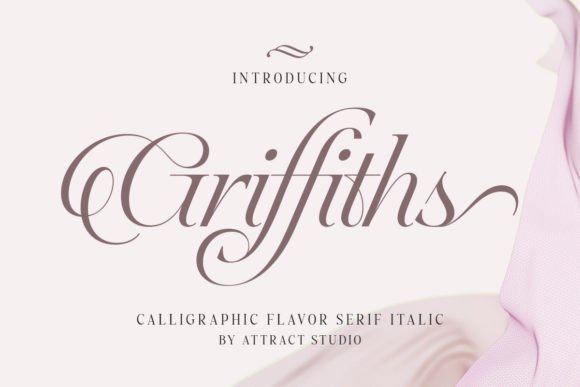
Griffiths: The Clean Italic Serif for Sophisticated Branding
Every designer hits that moment where a project demands something more than just a standard font. You're working on a brand identity for a boutique hotel, a logo for a high-end skincare line, or maybe the cover for a lifestyle magazine, and the typeface you choose needs to do more than just display words. It needs to communicate elegance, confidence, and a certain timeless quality. This is where a typeface like Griffiths enters the picture, offering a specific blend of clean structure and expressive flair that can elevate a design from good to memorable.
A Typeface with Personality and Precision
At its core, Griffiths is a clean italic serif. That "clean" part is crucial—it means the letterforms are refined and uncluttered, avoiding the overly decorative or distressed looks that can sometimes limit a font's versatility. The italic styling isn't just a slanted version of a regular weight; it's often designed with its own subtle character, giving it a sense of motion and elegance. What truly sets this particular typeface apart is its intended pairing with a dynamic calligraphic font angled at twenty-three degrees. This combination creates a fascinating visual dialogue: the structured, readable serif provides a foundation of professionalism, while the angled calligraphic script adds a human touch, energy, and a hint of artistic spontaneity. It’s this duality that makes it so effective for projects aiming for a sophisticated yet approachable aesthetic.
Where This Font Combination Shines
Thinking about practical applications, the Griffiths duo is incredibly versatile for anyone building a visual brand. Imagine using the clean italic serif for your primary brand name on a logo, with the angled script used for a tagline or a supporting element. The twenty-three-degree angle isn't arbitrary; it creates a dynamic visual flow that draws the eye, perfect for logos that need to stand out on a crowded shelf or a busy Instagram feed.
Beyond logos, consider packaging design. For a premium coffee brand, the serif could handle the product name and essential information with clarity, while the script might be used for phrases like "Small Batch" or "Artisan Roasted" on the label. This pairing adds layers of interest without sacrificing readability. For social media graphics, using the clean serif for headlines in your templates ensures your message is clear and professional, while the script can highlight key quotes or calls to action, adding a personal, crafted feel that stops the scroll.
The applications extend to print and digital alike. For a wedding invitation suite, the serif establishes the formal tone for the couple's names and details, and the script can beautifully render the venue or a romantic verse. On a website, the serif works wonderfully for navigation menus and body text, offering excellent readability, while the script can be used sparingly for accent headings or section breaks to maintain visual interest. It’s a system designed for cohesion.
Making It Work for Your Brand Identity
Choosing the right font is a strategic decision. Griffiths, as a premium font offering, provides a toolkit for building visual consistency. When you use the same clean serif across your business cards, website headers, and product tags, you create a recognizable rhythm that customers begin to associate with your brand. This consistency is a cornerstone of strong brand recognition. It tells your audience that you pay attention to details and value a cohesive presentation.
Readability is another critical factor, especially in our screen-heavy world. The clean nature of this serif typeface ensures that text remains legible at various sizes, whether it's a tiny copyright notice on a website footer or a large headline on a poster. Pairing it thoughtfully with its complementary script means you can use the more expressive element where impact is needed, without compromising the clarity of your core message.
Practical Tips for Implementation
If you're considering a font like this for a project, here are a few grounded recommendations. First, always test your font pairings in context. Create a mock-up of your logo, a sample social media post, or a draft of your packaging layout. Seeing the typefaces together in a real-world scenario is the only way to judge their harmony. Does the hierarchy feel right? Is the script overpowering the serif, or do they balance each other?
Second, review the included font styles thoroughly. A quality typeface family often comes with multiple weights (light, regular, bold, black) and possibly alternate characters or ligatures. Knowing what's in your toolkit allows for more creative and flexible designs. For instance, using a bolder weight of the serif for a key statistic in a brochure can create a powerful focal point.
Third, never overlook the licensing. If this is for a commercial project—a client's business, your own Etsy shop selling merchandise, a digital product you sell—ensure you have the correct commercial license. This protects you legally and supports the type designers who create these valuable assets. Many font marketplaces make this clear, but it's your responsibility to check.
Finally, let the font's personality guide your design choices. The sophistication of Griffiths lends itself to projects that value quality and craftsmanship. Think artisanal products, boutique services, editorial layouts for blogs about design or travel, or marketing materials for creative professionals. It’s less about shouting and more about making a refined, confident statement. The dynamic angle of its companion script injects just enough energy to keep things modern and engaging.
In the end, a typeface is a voice. The clean italic serif of Griffiths speaks with clarity and elegance, while its angled calligraphic partner adds a spirited, personal whisper. Together, they offer a complete language for brands and creators who want to communicate sophistication with a touch of dynamic flair, making them a worthy consideration for your next design project.