Le Petit Parisien: A Typeface That Whispers Stories of Paris
There's a particular quality to Parisian light—the way it catches the edge of a zinc café table, softens the curves of wrought-iron balconies, and turns an ordinary afternoon into something worth remembering. Le Petit Parisien captures that exact feeling in letterform. This hand-drawn, handmade typeface isn't just a collection of characters; it's a small love letter to the city that has inspired artists, writers, and dreamers for centuries. If you've ever sat on a sun-drenched terrace with a café crème, watching the world drift by, you already understand the mood this font carries.
Where Nostalgia Meets Modern Design
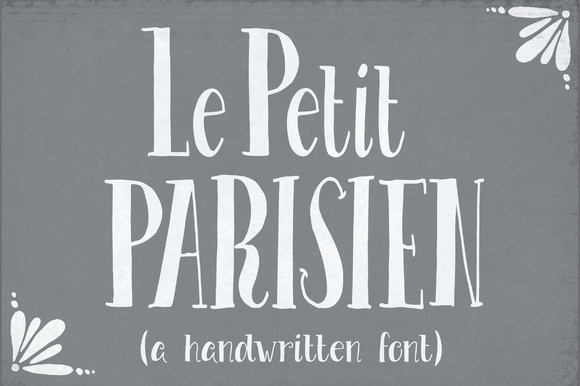
What makes Le Petit Parisien stand apart from thousands of other display fonts available today is its ability to bridge two worlds. On one hand, there's an unmistakable vintage warmth—the kind of irregularity and human touch you'd find on a hand-painted shop sign in Montmartre or a weathered menu at a bistro that's been serving the same coq au vin since 1932. On the other hand, the letterforms are clean enough and versatile enough to sit comfortably alongside contemporary design work. It doesn't feel dusty or outdated. It feels alive.
This balance is surprisingly difficult to achieve in type design. Many fonts that lean into a handcrafted aesthetic sacrifice readability or modern relevance. Others that aim for sophistication end up feeling cold and corporate. Le Petit Parisien threads the needle. The strokes have personality without being chaotic. The proportions feel deliberate without being rigid. It's the typographic equivalent of a perfectly tailored vintage jacket—it carries history, but it fits today.
Practical Applications for Real Projects
Understanding a font's personality is one thing. Knowing exactly where it works best is what separates good design from great design. Le Petit Parisien shines in specific contexts, and recognizing those contexts will help you get the most from this typeface.
Branding and Logo Design carry enormous weight for small businesses, especially those in lifestyle, hospitality, food, beauty, or artisan spaces. A bakery that wants to evoke handmade quality, a boutique hotel seeking old-world charm, or a skincare brand aiming for natural elegance—all of these can benefit from a typeface that already communicates warmth and authenticity before a single word is read. Le Petit Parisien does this heavy lifting naturally, reducing the need for excessive design elements to establish mood.
Packaging Design is another arena where this font excels. Think about the shelf appeal of artisanal chocolates, specialty teas, craft candles, or small-batch preserves. Consumers make split-second decisions based on visual cues, and packaging that feels personal and handcrafted stands out against the sterile minimalism dominating many retail categories. A handwritten font like this one signals care, attention, and a human story behind the product.
Social Media Graphics demand personality. In a feed full of generic templates and overused typefaces, a distinctive font stops the scroll. Whether you're creating Instagram quotes, Pinterest pins, Facebook headers, or TikTok overlays, Le Petit Parisien brings an editorial quality that elevates even simple layouts. Pair it with clean photography and restrained color palettes, and you have graphics that look professionally designed without requiring a design agency budget.
Invitations and Event Materials are a natural fit. Wedding invitations, dinner party menus, gallery opening announcements, product launch flyers—any occasion that calls for elegance with a personal touch benefits from this kind of typographic warmth. The font feels celebratory without being ornate, sophisticated without being stuffy.
Web Design, Blogs, and Digital Products also benefit, particularly for headings, pull quotes, and accent text. While Le Petit Parisien works beautifully at larger sizes for display purposes, it's worth noting that hand-drawn fonts like this one are best used strategically on screen. Reserve it for moments where you want to create visual hierarchy and emotional impact, then pair it with a clean sans serif or serif font for body copy to maintain readability.
Strengthening Brand Identity Through Typography
Typography is one of the most underutilized tools in brand building. Many entrepreneurs invest heavily in logos and color palettes but treat fonts as an afterthought. The reality is that typeface selection communicates volumes about brand personality, values, and positioning—often more directly than a logo mark.
When you choose a premium font like Le Petit Parisien for your brand materials, you're making a deliberate statement. You're telling your audience that you value craftsmanship, that you pay attention to details, and that your brand has a story worth telling. This kind of visual consistency across touchpoints—from your website headers to your business cards to your email signatures—builds recognition over time. People begin to associate that particular typographic voice with your brand, even before they read the words.
Visual consistency doesn't mean using one font everywhere. It means developing a thoughtful typographic system where each font plays a defined role. Le Petit Parisien might serve as your primary display typeface for headlines and accent text, while a complementary sans serif handles body copy and interface elements. This kind of pairing creates visual richness while maintaining cohesion.
Working With the Full Character Set
One practical advantage worth highlighting is the breadth of this font's character coverage. Le Petit Parisien includes all standard characters, currency symbols, copyright and trademark symbols, fractions, and the full range of accents needed for most European languages. This isn't always the case with hand-drawn or script fonts, where international character support can be limited.
For anyone working with multilingual audiences—whether you're a European small business, a travel blogger, or a brand with international customers—this expanded character set means you won't hit frustrating dead ends when writing in French, Spanish, German, Portuguese, Italian, or other Latin-script languages. The accented characters maintain the same handcrafted quality as the base alphabet, so your design stays consistent regardless of language.
Compatibility is another practical consideration that saves time and headaches. Le Petit Parisien works with Cricut Design Space, Silhouette Studio, Microsoft Word, Photoshop, Illustrator, and any application that uses installed system fonts. For crafters and makers using cutting machines, this is particularly valuable—you can cut vinyl decals, heat transfers, and paper crafts using the same typeface you've chosen for your broader brand materials. The included online manual walks through installation and usage across different applications, which is helpful for anyone who isn't deeply technical.
Making Smart Font Pairing Decisions
A beautiful display font reaches its full potential when paired thoughtfully with complementary typefaces. Le Petit Parisien, with its hand-drawn character and moderate contrast, works best alongside typefaces that offer visual contrast without competing for attention.
Consider pairing it with a geometric sans serif for a modern-meets-classic combination. The clean lines of a font like Montserrat or Futura provide breathing room and ensure body text remains highly legible while the display font handles emotional heavy lifting. Alternatively, a transitional serif like Baskerville or Georgia can create a more traditional editorial feel—think French literary magazine or heritage brand catalog.
The key principle is contrast in character, harmony in proportion. You want your paired fonts to feel different enough that each has a distinct role, but similar enough in weight and scale that they coexist without visual tension. Test your pairings at the actual sizes they'll appear—on screen, in print, on packaging mockups—before committing. What looks elegant at 72 points on a design mockup might feel overwhelming at 18 points on a business card.
Also consider readability at different sizes and in different contexts. Hand-drawn fonts like this one are display typefaces by nature—they're designed to be seen and felt at larger sizes. Using them for long paragraphs or small text typically compromises legibility. Instead, let them command attention where it matters most: headlines, logos, pull quotes, and accent moments.
A Font That Earns Its Place
The best design assets are the ones you reach for again and again because they consistently deliver. Le Petit Parisien isn't trying to be everything to every project—it's a specialist with a clear point of view. It belongs in the toolkit of anyone whose work involves storytelling, craftsmanship, beauty, or the kind of understated elegance that doesn't need to shout to be heard.
Whether you're building a brand from scratch, refreshing your visual identity, designing a product line, or simply looking for a typeface that brings genuine warmth to your creative projects, this is the kind of font that rewards thoughtful use. It has character without being gimmicky, personality without sacrificing function, and a timeless quality that won't feel dated next season.
Paris has always understood that beauty lives in the details—in the curve of a letter, the warmth of a gesture, the quiet confidence of something made with care. Le Petit Parisien carries that understanding into every word you set with it.