Simple Note: A Handwriting Font That Feels Like Your Own
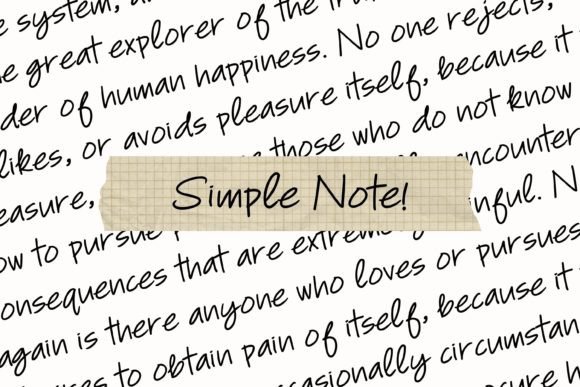
There’s a certain charm to handwritten notes that digital text often struggles to capture. It’s in the slight imperfection, the natural flow of ink on paper, the personality embedded in every curve and stroke. This is the feeling that the Simple Note font seeks to bring to your projects. It’s not just another script typeface; it’s a tool designed to inject a sense of casual authenticity and warmth into your visual communication, making your work feel more personal and approachable.
The Heart of a Natural Stroke
What sets Simple Note apart in a crowded field of premium fonts is its commitment to a genuine, handcrafted aesthetic. The designers have focused on creating letterforms that mimic the natural movement of a pen or marker, avoiding the overly uniform or digitized look that can make some script fonts feel sterile. Each character has subtle variations in weight and baseline, which is exactly what you’d see in real handwriting. This organic quality makes it incredibly versatile. It doesn’t scream for attention with flashy swashes; instead, it communicates with a friendly, confident voice. This makes it an excellent choice for projects where you want to establish a connection with your audience, whether you’re a small business owner writing product descriptions or a content creator designing social media graphics.
Practical Applications for Real-World Projects
The true value of a creative font like Simple Note is measured by how it performs in practical scenarios. Its casual yet clear personality makes it suitable for a surprisingly wide range of applications, both digital and print.
- Branding and Logo Design: For businesses aiming for a friendly, artisanal, or personal brand identity, Simple Note can be a cornerstone. Imagine it on a café’s menu, a boutique’s shopping bag, or a freelance designer’s portfolio website. It instantly communicates approachability and creativity.
- Packaging and Labels: On product packaging, especially for handmade goods, organic foods, or lifestyle products, this handwritten font adds a layer of authenticity. It tells the customer there’s a human behind the product.
- Digital Presence: Use it for blog post titles, website headers, or call-to-action buttons to break the monotony of standard web-safe fonts. On social media, it’s perfect for quote graphics, Instagram stories, and video thumbnails where you need text to stand out with personality.
- Print Materials: From wedding invitations and greeting cards to event posters and flyers, Simple Note brings a personal touch that formal serif or sans serif fonts can’t match. It’s also ideal for internal notes, journals, and planners where a personal feel is desired.
- Marketing and Editorial: In editorial design, it can be used for pull quotes or subheadings to add visual interest. For marketing assets like email newsletters or digital ads, it helps create a more engaging and less corporate tone.
How This Typeface Strengthens Your Visual Strategy
Choosing the right typeface is a strategic decision that impacts how your brand is perceived. Simple Note contributes positively to several key areas of visual communication.
First, it enhances brand recognition. A distinctive, consistent font becomes a visual shorthand for your brand’s personality. When customers repeatedly see Simple Note in your materials, they begin to associate that friendly, authentic feeling with your business. This builds a stronger, more memorable brand identity.
Second, it boosts audience engagement. The human eye is naturally drawn to things that feel organic. A headline or a call-to-action set in a believable handwritten style can feel more like a personal note from a friend than a generic advertisement, which can increase click-through rates and reader retention.
Finally, when used thoughtfully, it improves professional presentation. The key is contrast and context. Pairing Simple Note with a clean, simple sans serif font for body text creates a beautiful hierarchy. The handwriting font adds flair and focus to headlines and key messages, while the supporting font ensures the main content remains highly readable. This combination shows intentionality and design savvy.
Making It Work: Tips for Effective Use
To get the most out of any display font, including Simple Note, a bit of practical advice goes a long way. The goal is to leverage its strengths without compromising clarity.
Test Your Font Pairings: Never use a creative font in isolation. Always test it alongside your chosen body text font. A good rule of thumb is to pair a script or handwritten font with a neutral sans serif or a clean serif. The contrast should be pleasing, not jarring. For instance, Simple Note might pair beautifully with a geometric sans serif like Montserrat or a classic serif like Lora.
Prioritize Readability: While Simple Note is designed for legibility, it’s still a decorative font. Use it for short bursts of text—headlines, titles, quotes, logos—not for long paragraphs. At very small sizes, the details that give it character might become muddled. Always print a test page or view it on multiple screens to ensure it reads clearly at its intended size.
Review the Included Styles: A well-crafted premium font often comes with more than just the basic letters. Check if Simple Note includes alternate characters, ligatures, or multiple weights. These extras can provide valuable flexibility, allowing you to customize the look for different applications and avoid repetition in your designs.
Understand the License: If you’re using the font for commercial projects—which you likely are if you’re a business or designer—ensure you have the correct commercial license. This legal step protects you and respects the work of the font creator. Reputable font foundries make licensing terms clear and straightforward.
A Tool for Authentic Connection
In a digital landscape saturated with polished, sometimes impersonal graphics, a font that feels genuinely human can be a powerful differentiator. Simple Note offers a bridge between professional design and personal touch. It’s a versatile design asset that, when used with intention, can help tell your brand’s story more effectively, create more engaging content, and build a visual identity that resonates on a personal level. It’s not about replacing your core typography, but about enriching it with a voice that feels unmistakably your own.