Rushk: The Display Font with a Gritty, Hand-Painted Soul
There’s a moment in every creative project where the typeface either clicks or crashes. You’ve nailed the concept, the colors are right, the imagery is strong—but the font feels sterile, too corporate, or just plain forgettable. That’s where a character-driven typeface like Rushk enters the picture. It’s not trying to be the quiet, neutral voice in the room. It’s a dry brush sans serif with a textured, handcrafted edge, designed for projects that need to feel authentic, relaxed, and a little bit raw.
If you’re working on a brand, a poster, a social media campaign, or a product label that aims to connect on a human level, Rushk offers a visual language that’s both striking and approachable. Let’s explore how this unique display font can be the secret ingredient that gives your designs real personality and grit.
Understanding the Rushk Aesthetic: More Than Just Letters
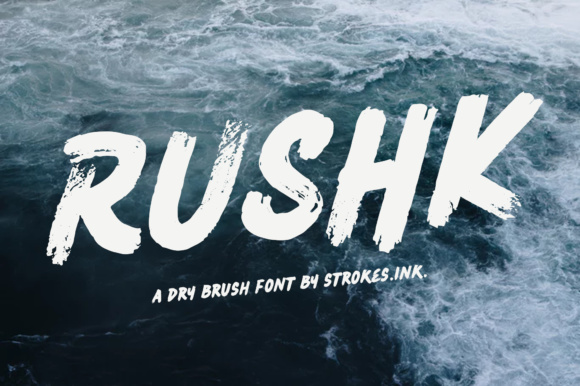
At its core, Rushk is a sans serif font, but that simple classification doesn’t do it justice. The “dry brush” technique means each letterform looks like it was painted with a brush that had just enough ink, leaving behind subtle imperfections, varying stroke weights, and a tactile texture you can almost feel. This gives it an organic, almost rebellious quality that smooth, digital fonts can’t replicate.
Think of it as the typographic equivalent of a vintage band t-shirt or a well-worn leather jacket. It’s stylish without trying too hard. This makes it a fantastic premium font for projects that want to convey authenticity, craftsmanship, or a hip, relaxed vibe. It avoids the coldness of geometric sans serifs and the formality of traditional serifs, landing in a sweet spot that feels modern yet timeless.
Where Rushk Shines: Practical Applications for Real Projects
The true test of any design asset is how it performs in the wild. Rushk’s textured, bold nature makes it a specialist, not a generalist. It’s built for impact, so it excels in contexts where you need to grab attention quickly and leave a lasting impression. Here’s where it really comes to life:
- Logo & Brand Identity: For brands in the lifestyle, outdoor, artisan food, or creative service spaces, Rushk can become the cornerstone of a logo design. It instantly communicates a brand that values authenticity over polish. Imagine it on a coffee roaster’s packaging or a boutique surf shop’s signage—it just works.
- Packaging & Labels: On a shelf crowded with clean, minimalist designs, a product using Rushk stands out. It’s perfect for craft beer labels, handmade soap packaging, or small-batch hot sauce bottles. The texture suggests something made by hand, not by machine.
- Social Media & Digital Content: In the fast scroll of Instagram or Pinterest, a bold headline in Rushk can stop thumbs. Use it for quote graphics, announcement posts, or story highlights. It adds a layer of visual interest that stock fonts simply lack.
- Posters & Event Flyers: Whether it’s for a local music festival, a community workshop, or a pop-up market, Rushk brings an energetic, grassroots feel. It’s readable at a distance but full of character up close.
- Merchandise & Apparel: Think t-shirts, tote bags, or hats. Rushk’s gritty texture translates beautifully to screen printing or embroidery, giving merchandise an authentic, streetwear-inspired aesthetic.
- Editorial & Blog Design: Use it sparingly for pull quotes, section headers, or article titles in a magazine-style layout or on a blog. It breaks up the monotony of body text and draws the reader’s eye to key points.
Making It Work: Pairing and Practicality
A creative font like Rushk is a powerhouse, but using it effectively requires a bit of strategy. You wouldn’t use a highlighter for every word in a book; similarly, Rushk is best used as a headline or accent font. Its textured details can become overwhelming and reduce readability in long paragraphs of body copy.
The key is font pairing. Rushk’s rugged personality needs a calm, clean counterpart to create balance. Pair it with a simple, geometric sans serif (like Montserrat or Poppins) or a classic, readable serif (like Lora or Merriweather) for your body text. This contrast allows Rushk to do its job—command attention—while the secondary font ensures your message is easily digestible.
Before committing, always test your chosen typeface in context. Mock up a logo, lay out a social media post, or create a sample packaging label. See how it feels with your color palette and imagery. Does it enhance the message or compete with it? This hands-on testing is crucial for achieving visual consistency and ensuring your brand identity feels cohesive.
Beyond the Basics: Licensing and Final Thoughts
When you find a commercial font that clicks, it’s important to understand its licensing. Rushk, like most quality fonts, comes with specific terms for use. Typically, a desktop license covers use in logos, print materials, and merchandise, while a web license may be needed for embedding it on your website. Always review the license provided by the foundry or marketplace to ensure your project—whether it’s for a client or your own business—is fully covered.
In a landscape saturated with smooth, perfect vectors, Rushk is a breath of fresh air. It’s a tool for designers, entrepreneurs, and creators who understand that sometimes, the most powerful communication isn’t slick—it’s real. It doesn’t just spell out words; it sets a mood, tells a story, and gives your project a voice that’s unmistakably human. If your next design needs that kind of grit and personality, Rushk might just be the missing piece.