Enchant: A Celtic Typeface Rooted in History, Ready for Modern Projects
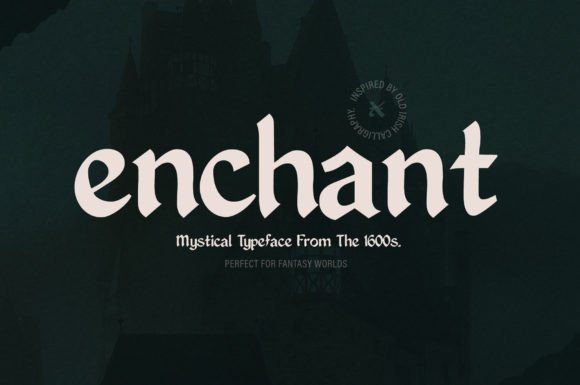
There's something magnetic about a typeface that feels like it has a story to tell. Not every font carries that weight, but when you stumble across one that does, it changes the way you approach a project. Enchant is one of those rare finds—a Celtic-inspired calligraphy typeface with roots in the 1600s that manages to feel both ancient and strangely versatile. It's the kind of font that makes you pause mid-scroll, the kind that gives a book cover that "I need to know more" quality, the kind that turns a simple social media post into something people actually stop to read.
What makes Enchant stand out in a sea of display fonts is its balance. Celtic and medieval-style typefaces often lean too hard into ornamental territory, sacrificing legibility for drama. Enchant avoids that trap. Its letterforms are intricate without being cluttered, decorative without descending into illegibility. Each character carries the hand-drawn warmth of historical calligraphy, but with enough clarity that you can use it in contexts where the reader actually needs to understand the words. That combination—beauty plus readability—is surprisingly uncommon in premium fonts of this style.
Where This Typeface Truly Shines
Think about the projects where atmosphere matters as much as information. Book covers for fantasy novels, historical fiction, or mythology collections are an obvious fit. The Celtic aesthetic immediately signals a certain genre and mood to the reader, which is half the battle in cover design. But Enchant goes well beyond book jackets. Imagine it on a craft brewery's label, where the hand-lettered quality communicates artisanal care. Picture it on a wedding invitation with a Celtic or rustic theme, where the elegant strokes set the tone before a single word is read. Consider it for a tattoo studio's branding, a Renaissance fair poster, or a heritage food brand that wants to evoke tradition and authenticity.
For small business owners and entrepreneurs, font choice is often an afterthought—or worse, a source of decision paralysis. You know typography matters for your brand identity, but scrolling through thousands of options on a font marketplace can feel paralyzing. Enchant narrows that search considerably if your brand personality leans toward the historic, the mystical, the artisanal, or the culturally rooted. It does a specific job exceptionally well, and sometimes a font that knows exactly what it is beats a "does everything" option that ends up looking generic.
Pairing Enchant with Other Design Assets
No typeface works in isolation, and Enchant is no exception. One practical approach is to pair it with a clean sans serif font for body text or supporting copy. The contrast between Enchant's ornate letterforms and something like a straightforward geometric sans creates visual hierarchy without competing for attention. If you're designing a poster, for example, Enchant can handle the headline or event name while a simple serif or sans serif font carries the date, location, and ticket details. This kind of font pairing strategy is fundamental to good editorial design and packaging design alike.
For web design, Enchant works best as an accent font rather than a primary workhorse. Use it for hero section headings, section titles, or callout quotes where you want to create a moment of visual impact. Pair it with a highly legible body font—something like a modern serif or a humanist sans serif—and you get the best of both worlds: personality at the top of the page, readability throughout the content. Bloggers who write about history, mythology, folklore, craft, or fantasy can use Enchant for their blog headers or featured image text to create a cohesive visual identity that reinforces their niche.
Readability: The Non-Negotiable Factor
Here's where honest advice matters more than enthusiasm. Enchant is legible for a Celtic-style calligraphy font, but that doesn't mean it's appropriate for every context. A 9-point caption under a product photo? Probably not the right call. A short headline on a t-shirt? Perfect. The general rule with any script font or decorative display font is this: the less text you're setting, the more you can afford to prioritize style over simplicity. Enchant excels in short-form applications—logos, emblems, single-word or short-phrase headings, product names, and display text where the font's personality is the main event.
If you're working on digital products like printable wall art, greeting cards, or downloadable planner inserts, Enchant gives you that handcrafted look without requiring actual calligraphy skills. For merchandise—think mugs, tote bags, t-shirts—its distinctive Celtic character makes designs feel premium and intentional. The key is to test your layouts at the actual size they'll be viewed. A font that looks gorgeous on a 27-inch monitor might lose its charm when printed on a 4×6 card, so always mock up your work before committing.
Licensing and Practical Considerations
Before using Enchant in commercial projects, take a moment to review the licensing terms that come with your purchase. Most premium fonts offer different licenses depending on whether you're using them for personal work, client projects, merchandise for sale, or large-scale distribution. Understanding these terms upfront saves headaches later, especially if you're a designer handing off files to a client or a small business owner planning to print thousands of product labels. It's not the exciting part of the creative process, but it's the part that keeps you out of trouble.
Enchant also typically includes multiple styles or weights, so explore what's in the package before you start designing. Some Celtic-inspired typefaces include alternate characters, ligatures, or stylistic sets that open up additional creative possibilities. Spending ten minutes reviewing the font's full character set can reveal options you didn't know you had—swash capitals, alternate endings, or decorative elements that add another layer of customization to your work.
Making the Most of a Distinctive Choice
The designers and creators who get the best results from typefaces like Enchant are the ones who match the font to the project's emotional goal rather than just its aesthetic preference. A Celtic-inspired typeface communicates heritage, craftsmanship, mystery, and a connection to tradition. If those qualities align with your brand or your project's message, Enchant becomes more than a decorative choice—it becomes a strategic one. Visual consistency across your brand identity, from your logo to your social media graphics to your packaging, builds recognition. When your audience sees those distinctive letterforms, they should immediately connect them to your work.
For content creators and marketers, that kind of instant recognition is invaluable. It turns a font from a design asset into a brand asset. And in a landscape where every Instagram feed and Etsy shop is competing for attention, having a visual signature that people remember is a genuine advantage. Enchant won't be the right fit for every project or every brand—but for the ones where it fits, it doesn't just decorate. It communicates. And that's what good typography has always done best.